AlUla · العلا
AlUla and Hegra, planned as a day
The northwest desert rewards a short list. Hegra, the old town, and one landscape stop are already a full day. A photograph of a famous rock is not a map of the others.
01
Get the journey in scale
AlUla is in Medina Province, in the northwest of the country. It is not a side trip from a Riyadh morning. People fly, or they drive a long day. If you have one date on the ground, choose Hegra or the old town plus a single rock formation. Collecting every name you have seen online is how the sun wins.
From about October through March, multi-hour walking is realistic. In summer the sun is the main fact. Start early, carry more water than a city day, and keep a shaded break in the plan. Winter nights drop. A layer that seemed unnecessary at noon is useful after dark if you are away from lit streets.
02
Hegra is managed ground
Hegra, also called al-Hijr and Mada’in Salih (الحجر), was inscribed by UNESCO in 2008. It is the largest conserved Nabataean site south of Petra. UNESCO describes 111 monumental tombs, 94 of them with decorated facades, along with wells and earlier inscriptions. The facades date mainly from the 1st century BC to the 1st century AD. The ground is open desert. The tombs are spread out. This is not a covered souq with a single door.
The site operator controls access. Visitors should expect a timed entry arranged through the operator’s own channels. This website does not sell that entry and cannot see whether a given day is open. Arrange it first, then build the rest of the day around that time. Arriving with no arrangement is a poor plan.
On the ground: closed shoes, a hat with a cord, water, and a charged phone. Sand and stone are the path. Facades are carving, not climbing walls. Do not touch decorated stone or step into an opening that a barrier or a guide has closed. Signs on the site outrank this page.
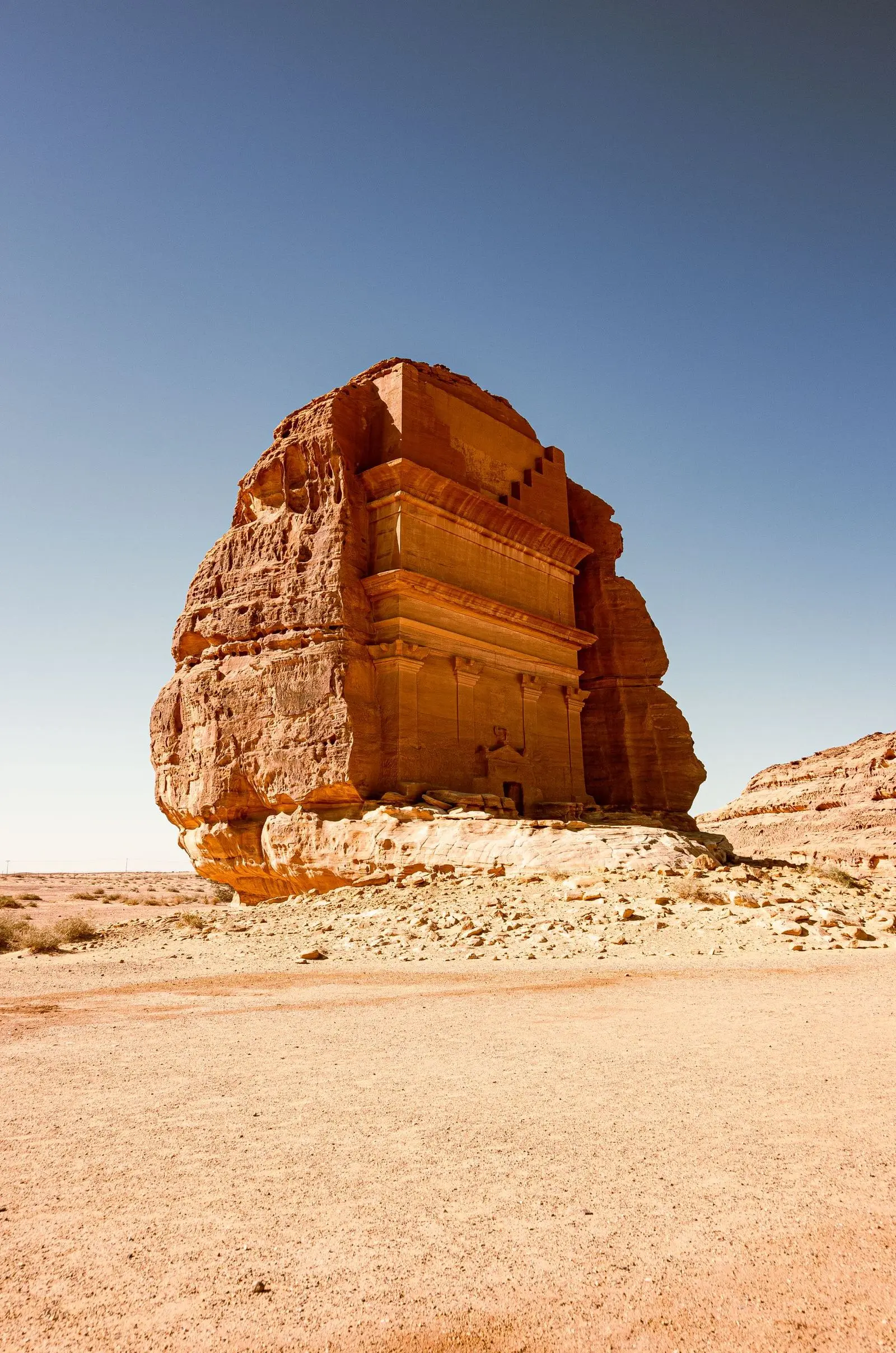
One tomb stands apart from the main groups. Visitors know it as Qasr al-Farid. The photograph shows that kind of solitary facade. Give it time, then leave room for other people. It is one tomb, not the whole site. Allow a couple of hours at Hegra if your entry window is that long, and do not expect shade.
03
The old town is mud brick under cliffs
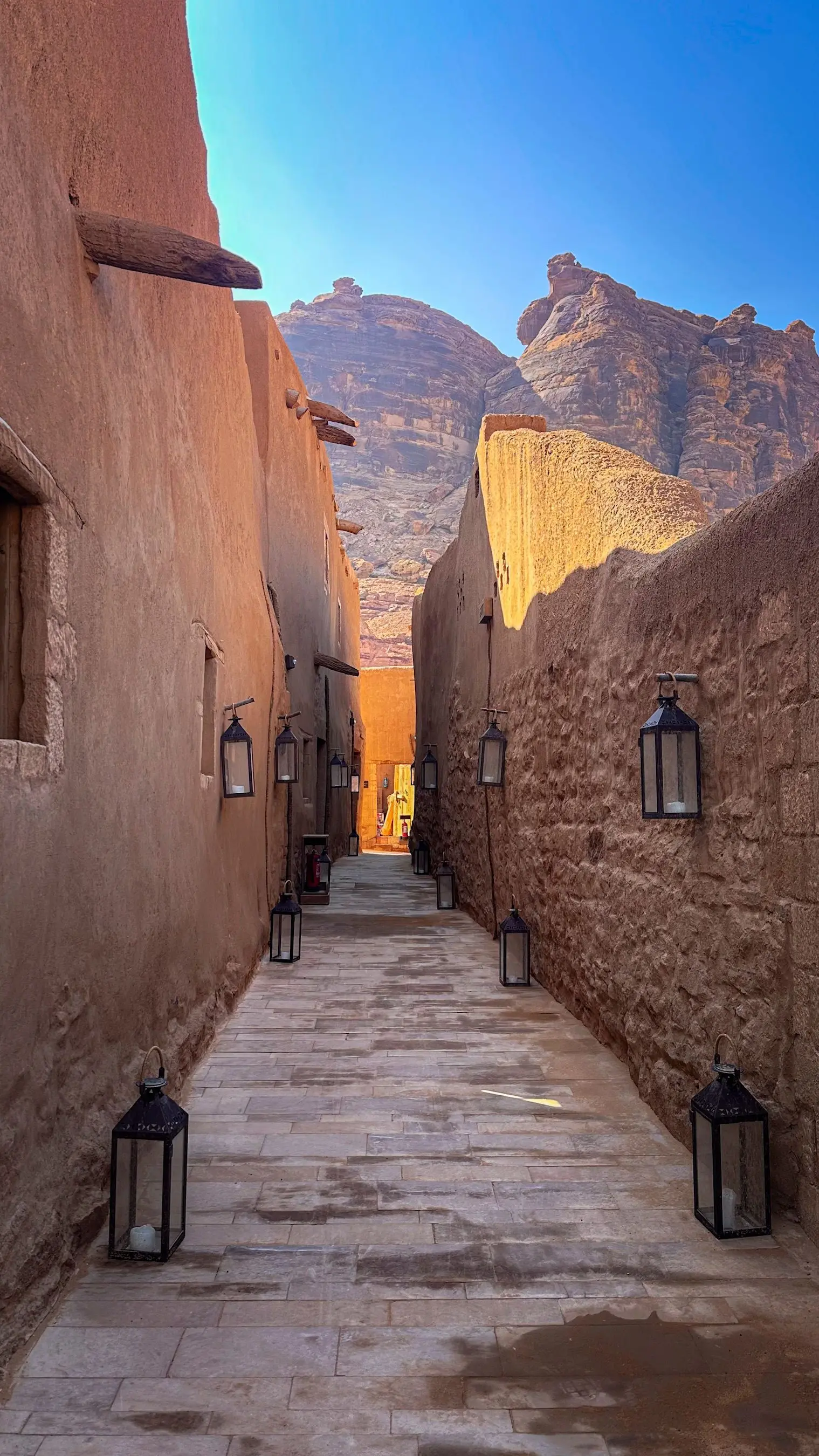
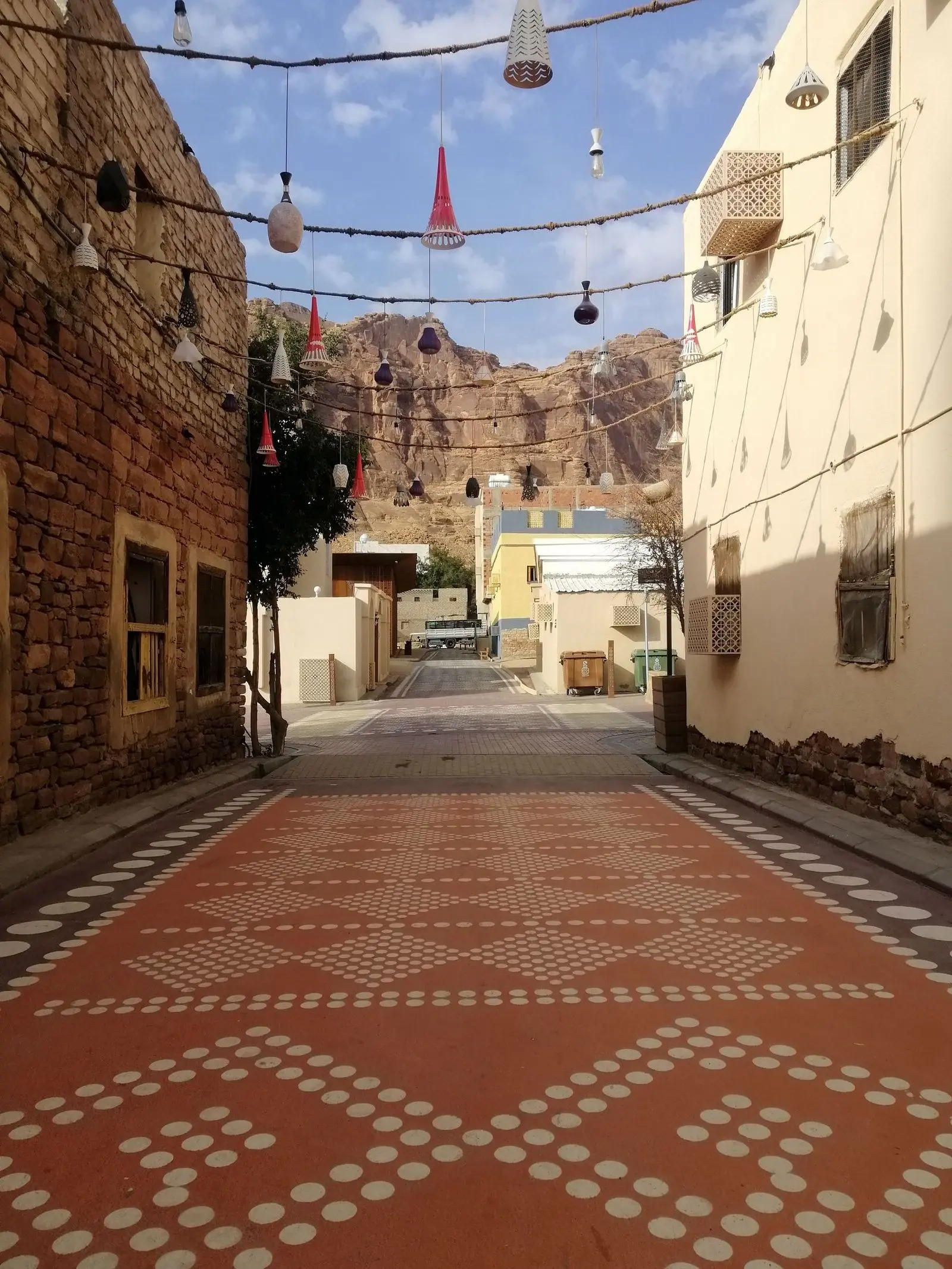
AlUla’s old town is a separate walk from the tombs: lanes of earthen houses, some restored for visitors, some still quiet streets, with sandstone behind them. The photographs here are of that town. They will not help you find a tomb facade.
Do not lean on earthen walls or climb to a roof. The same modesty of dress you would use in Diriyah applies. Morning light is easier on the lanes than midday. If a workshop or a house is open, you are a guest in a street, not a customer of this website.
04
Do not merge the rocks
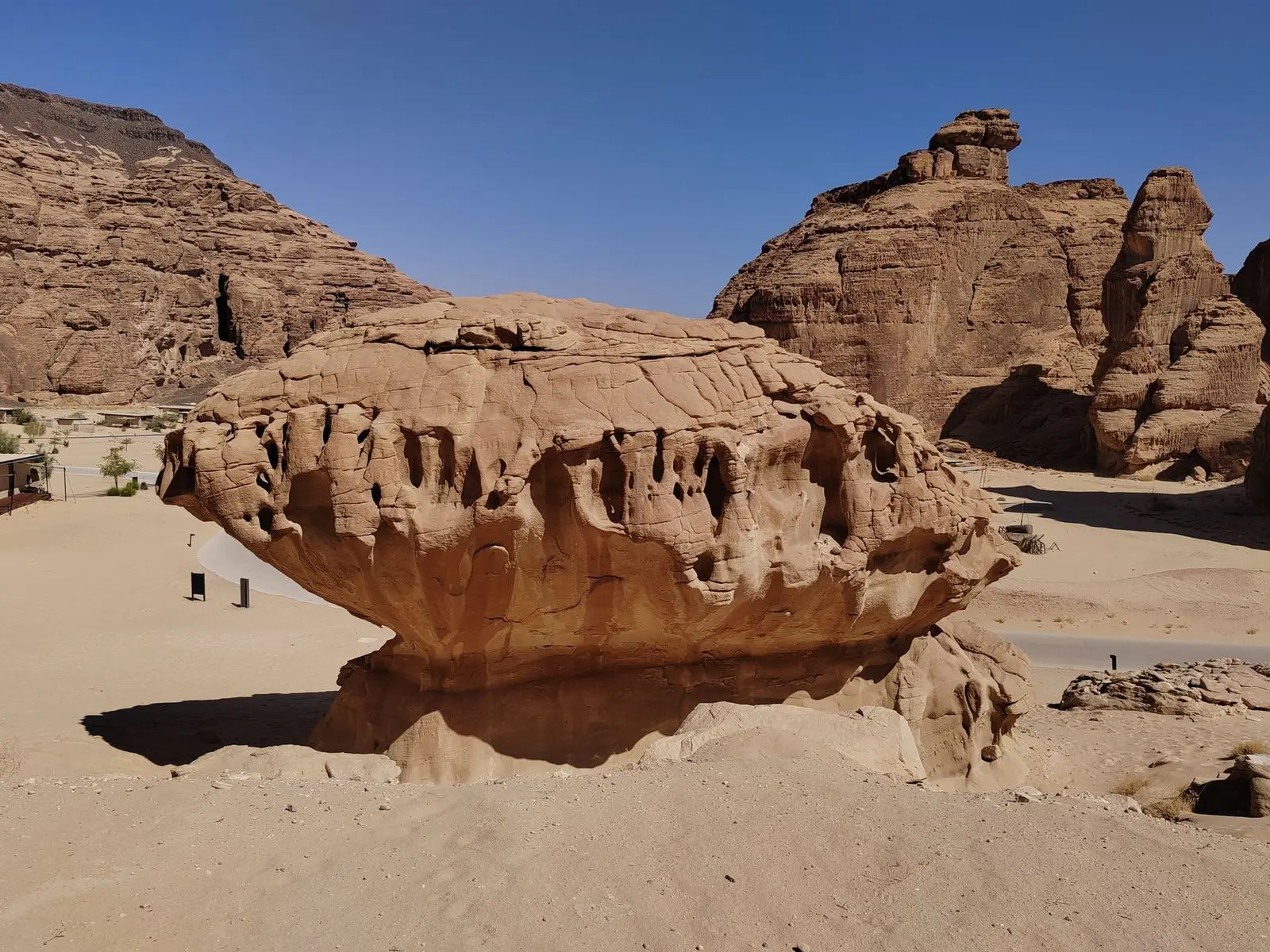
Elephant Rock is a sandstone formation in the wider AlUla area. It is not a Nabataean tomb and not inside the Hegra entrance. Late afternoon draws more people. Stay on marked ground and do not climb unstable rock. Ask how long the drive is before you add it to a day that already includes the tombs.
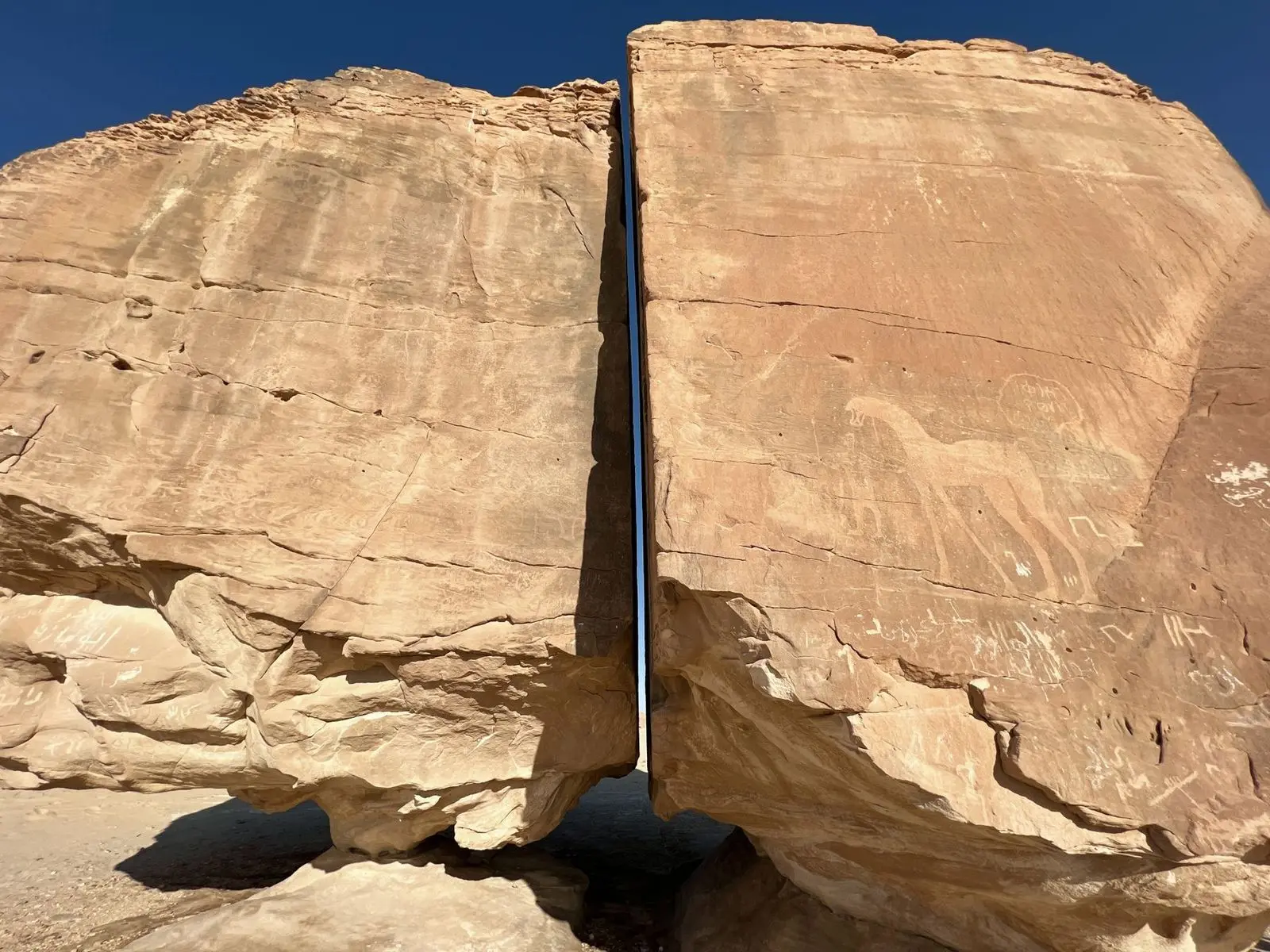
Al Naslaa, the boulder split by a straight gap, stands near Tayma. Tayma is a different town. A driver who offers “the rock” may mean either, or something else. Ask for the name and the time in the car. The photograph below is Al Naslaa, included so the confusion is visible.
If the day is only the old town, that is a complete day. Hegra without the rocks is also complete. The calendar shows why summer squeezing is a bad bargain. For another earthen site, closer to Riyadh, see Diriyah. For the museum version of this history, see the Arabian kingdoms gallery in Riyadh.