Riyadh · الرياض
Riyadh on the ground
The capital reads as a list of famous names and behaves as a set of separate districts. A useful day picks one outdoor area, one indoor stop, and a realistic ride between them.
The city is wider than the list
Riyadh sits inland. Summer days are often above 40°C, and the heat is dry. Winter days are milder, and evenings, especially on open rock, can be cold and windy. The weekend is Friday and Saturday. Prayer times pause many shops. None of that is a reason to skip the city. It is a reason to stop treating every pin as a neighbor.
Ride-hailing and cars do the work that a single metro walk will not. If you are moving between the museum district and the northwest edge, leave a margin. Traffic, not the map’s straight line, sets the hour you arrive.
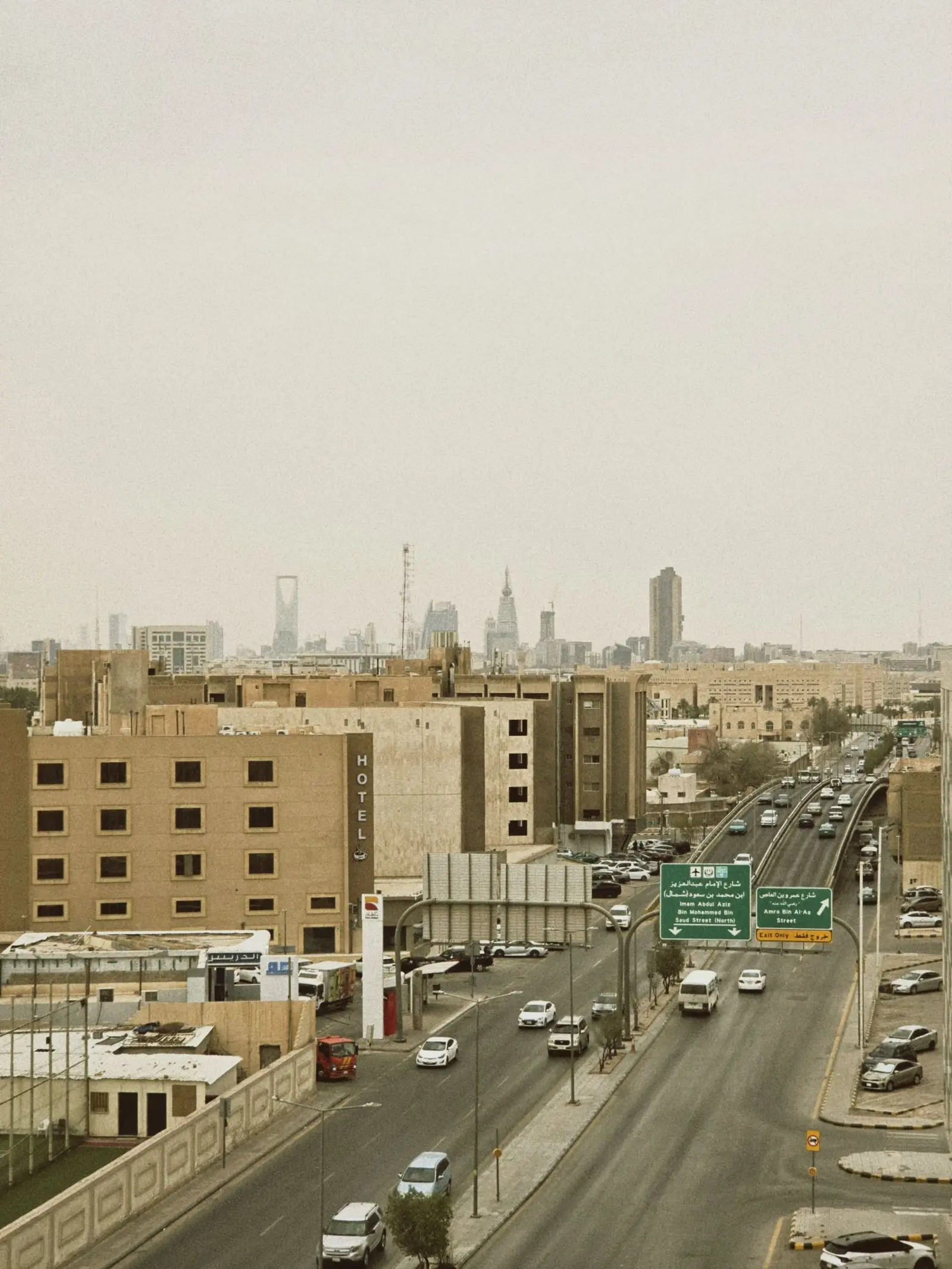
Al-Murabba, for the middle of the day
The National Museum stands in the King Abdulaziz Historical Center in Al-Murabba. The museum’s own contact line has used King Saud Road. The building is the indoor piece of a Riyadh day: geology and history galleries, air conditioning, and a floor plan that is too large to rush.
The center has outdoor grounds around it. In summer those paths are an approach, not the visit. Carry water if you will sit outside. Covered shoulders and knees match the standard at the museum. A layer is useful inside, because the contrast with the street is sharp.
Wadi Hanifah is a corridor, not a viewpoint
Wadi Hanifah is the valley system that runs through the west of the city, restored in long stretches as a public landscape. People use it for walking. It is not a single terrace with one view. If you treat it as an end-to-end route on a hot afternoon, the distance wins.
Choose a short section near where you already are. After rain, low ground can hold water and some tracks close. Do not drive around a barrier to see whether it was serious. Shade is uneven. The same water bottle rule applies as on any exposed Riyadh walk.
Diriyah is a district on the edge
Diriyah sits northwest of the center, on the oasis side of the valley. At-Turaif is the earthen quarter on the UNESCO list. Newer streets with restaurants sit beside that history and are easy to mistake for the visit itself. You can eat in the area and still have missed the site.
It is not a short walk from Al-Murabba. In hot months, do Diriyah early and the museum later, or drop the outdoor walk. The separate note covers mud brick, shoes, and time.
The Diplomatic Quarter, if you want a walk
The Diplomatic Quarter, in the west of the city, is one of the places residents actually walk. Blocks are shorter than on many commercial streets, and there are public parks. It is still a working district of residences and embassies. Stay on public paths, and do not treat a compound gate as a viewpoint entrance.
It pairs poorly with a same-morning plan that also includes the escarpment. Pick the walk in the city, or the rock outside it.
The escarpment, only as a real day trip
Jebel Fihrayn, widely called the Edge of the World in English, is a cliff line on the Tuwaiq escarpment on the order of 90 kilometers northwest of Riyadh. It is not a city park. Reports and photographs agree on the practical facts: an unpaved approach, little or no phone signal, no cafés, and no railings.
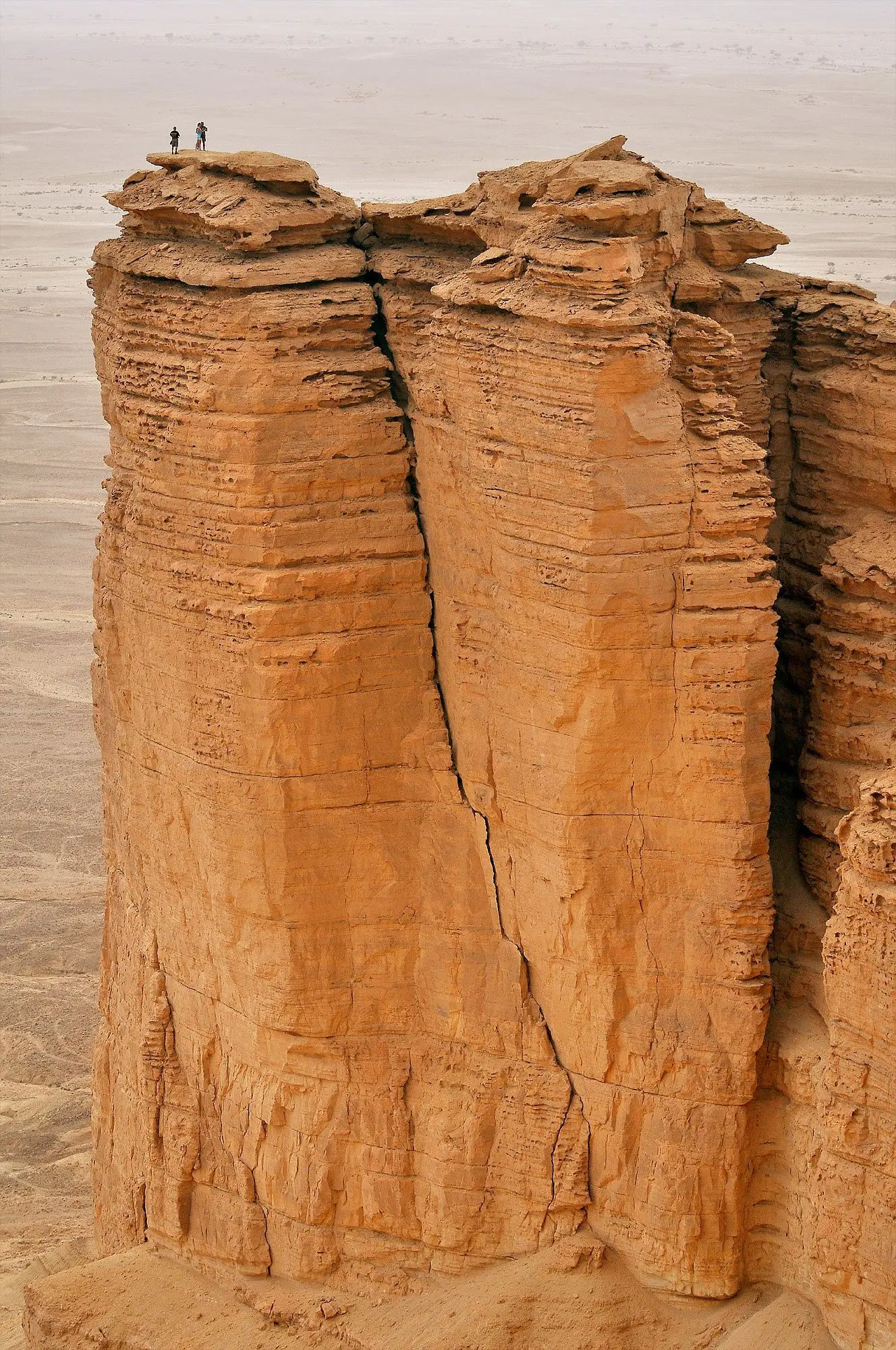
A high-clearance vehicle is the ordinary choice for the last stretch. A low car is a common way to get stuck. Download an offline map before you leave paved roads. Tell someone the route and the time you intend to be back. Go out and back in daylight. Leaving the rim at dusk means driving the track in the dark.
Carry water for everyone in the car, and more of it in warmer months. There is little shade and the wind on the rim takes hats that are not secured. The limestone at the lip is uneven and can be undercut. Stay well back from the edge. Keep children beside you. Do not step onto an overhang for a photograph. The picture on this page is a warning about scale, not a pose.
Tracks and any gates change. Do not trust a schedule copied from an old blog post. If the track is closed, soft, or simply beyond the vehicle you have, turn around. There is no ticket sold by this website, and there is no service that makes the rim managed ground. Rubbish comes back to the city with you.
From May through September, this is a poor plan. Heat, exposure, and a long unpaved drive do not belong in the same afternoon.
A day shape, not a package
In cooler months, a possible day is a morning outdoors — Diriyah, or the escarpment if the vehicle and the daylight are real — then the museum, then a short walk rather than a third major site. In hot months, drop the escarpment, keep Diriyah to the opening of the day if you keep it at all, and give the museum the late morning.
Water parks near the city, including the one in Qiddiya, are a different kind of day. They are explained on the water page, which also separates them from this publisher. For the year’s pattern, use the calendar.
Nothing here clears you to drive off pavement or to stand on a cliff. Those decisions stay with you, and with the conditions you find.