Diriyah · الدرعية
Diriyah and the earthen city
At-Turaif is a UNESCO district of mud-brick palaces and lanes on the northwest side of Riyadh. The restaurants next to it are a different visit. Knowing which one you are in changes the day.
Three names, three places
Diriyah is the district. At-Turaif (الطريف) is the historic quarter inscribed in 2010. The wider visitor streets, including the dining area known as Bujairi, sit beside that history. You can finish a meal and a photograph of a lit facade and still have missed the earthen site. You can also walk the site and skip the restaurants without missing what the list entry describes.
UNESCO describes the first capital of the Saudi dynasty, Najdi architecture particular to the center of the peninsula, a settlement from the 15th century, and a larger political role in the 18th and early 19th centuries. The property is an urban ensemble on the edge of the oasis: palaces, mosques, and lanes in earth, not a single monument in a car park.
What to look at
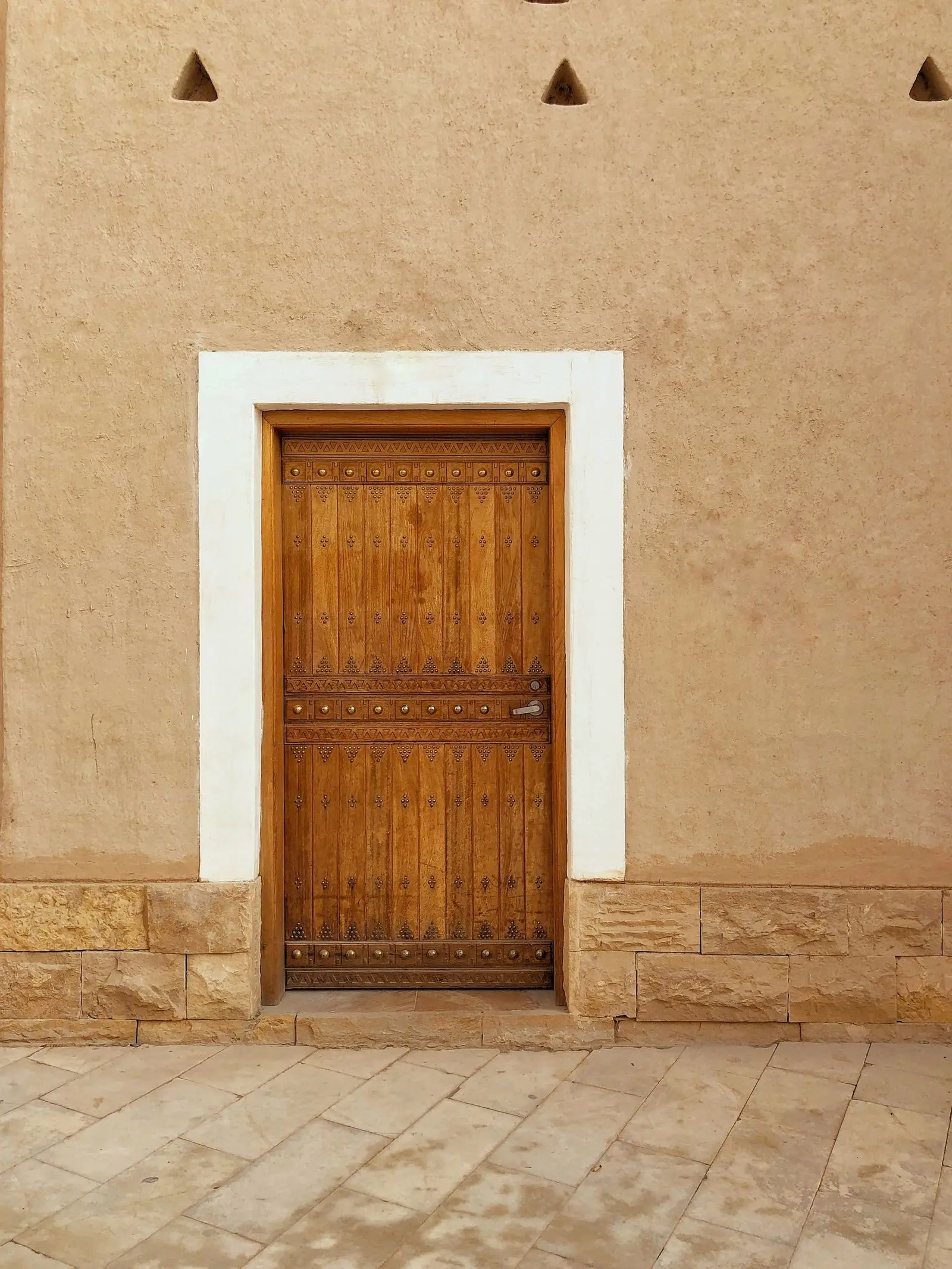
Mud brick reads slowly. Walls are thick because earth is the insulation and the structure. Openings are small, often triangular, to limit heat and to keep the wall strong. Lanes bend. Upper floors step. Repaired patches are part of keeping an earthen building standing. They are not a flaw to test with your hands.
Walk slowly enough to tell a palace wall from a lane wall. Look at how water would leave a courtyard, and at the difference between original earth and a newer protective coat. Interpretation on the site is the primary text. This page is the preparation, not a substitute for the labels.
Do not touch carved mud, do not climb, and do not fly a drone on the assumption that open sky means permission. If a room is closed for conservation, it stays closed. Dress modestly. This is a heritage site bound up with national history, and parts of it are religious space. Follow the instruction at that door.
The Sadus photograph is not the palace
Sadus is another settlement in Riyadh Province with mud-brick houses. The picture shows that material clearly. It is not a wayfinding photo for At-Turaif, and it should not be used as one. Najdi earth appears in more than one town. The UNESCO site is the specific ensemble at Diriyah.
Heat, shoes, and the other half of the day
Most of At-Turaif is open to the sky. From May through September, go at the start of the day or do not plan a long outdoor walk. Wear shoes with a grip. Restored paths and old lanes are both uneven. A half day is a fair allowance if you read as you go. An hour covers a short loop and little of the detail.
The National Museum is indoors, in Al-Murabba, not next door. The ride between them is part of the plan. In summer, do the outdoor site first. In the cooler months described in the calendar, the order is more forgiving, and a late afternoon still needs a layer when the wind picks up.
How Diriyah sits in the rest of the capital — the valley, the museum district, the escarpment you should not casually add — is on the Riyadh page. AlUla’s old town is the other earthen walk in these notes, and it is a journey away: AlUla and Hegra.